
Valley Stream Block Record Sources
Block research works best when it leans on land records first. People come later. Nassau's parcel map shows lot shapes and SBL numbers. The Village tax roll adds dated owner-mailing, deed-reference, value, and exemption fields for each parcel. The County Clerk index tracks recorded transactions. A focused Village request can also seek a releasable building file. Older maps, newspaper notices, and directory leads may sit at the library or the Valley Stream Historical Society once the original item is checked. None of these systems is a household roster. An owner, a tax mailing contact, or a deed party may have real ties to a parcel without living there. Trustees, lenders, and agents appear too, so a record name is only a lead. Treat every entry as dated, parcel-based evidence. Each source answers a different block question.
| Block source | What it can show about nearby parcels | Access route |
|---|---|---|
| LRV and GIS map | Parcel shapes, SBLs, map attributes, and historic geography | Address, SBL, map search, and Identify tools |
| Village tax roll | Parcel, owner mailing data, deed reference, values, and tax context | Village roll or office |
| County Clerk index | Recorded transaction parties, dates, document types, and land citations | Name, document, or date search, then image or counter request |
| Building-file FOIL | Address-specific historical building evidence if releasable | Targeted Village request |
| VSHS, newspapers, and directories | Historic neighborhood and address context | Archive, library, or research request |
Note: Write the source date beside each SBL, since a later property change can otherwise be mistaken for a fact about the same block at an earlier time.
Map Valley Stream Neighbor Parcels
The Nassau Land Records Viewer map supports a close, parcel-by-parcel look. Type the address and select Go. Then use Identify on the target feature. From there, click each abutting parcel shape and note the SBL and address it returns. The controls include Legend, Layers, Tools, Identify, and measurements for area, distance, and location. Layer options cover parcels, lots, aerial imagery, FEMA flood zones, and Nassau County overlays from 1926 and 1950. The public map offers no radius or buffer selector. It produces no named-neighbor report either. The result is adjacent parcel identifiers, not residents. Save each SBL before opening the assessment viewer or a County Clerk record, because that number keeps two similar street addresses from blurring together.
- Locate the known Valley Stream address in the map and confirm the target parcel before using any adjacent shape.
- Select Identify on the target, then on each parcel that shares a boundary, and record the displayed SBL and address.
- Open each SBL in the assessment viewer or Village tax roll for dated property context, keeping its source date with the result.
- Use a party name, date, or document citation only to trace a specific recorded transaction through the County Clerk index.
The Nassau parcel-map view displays the county's official GIS setting.
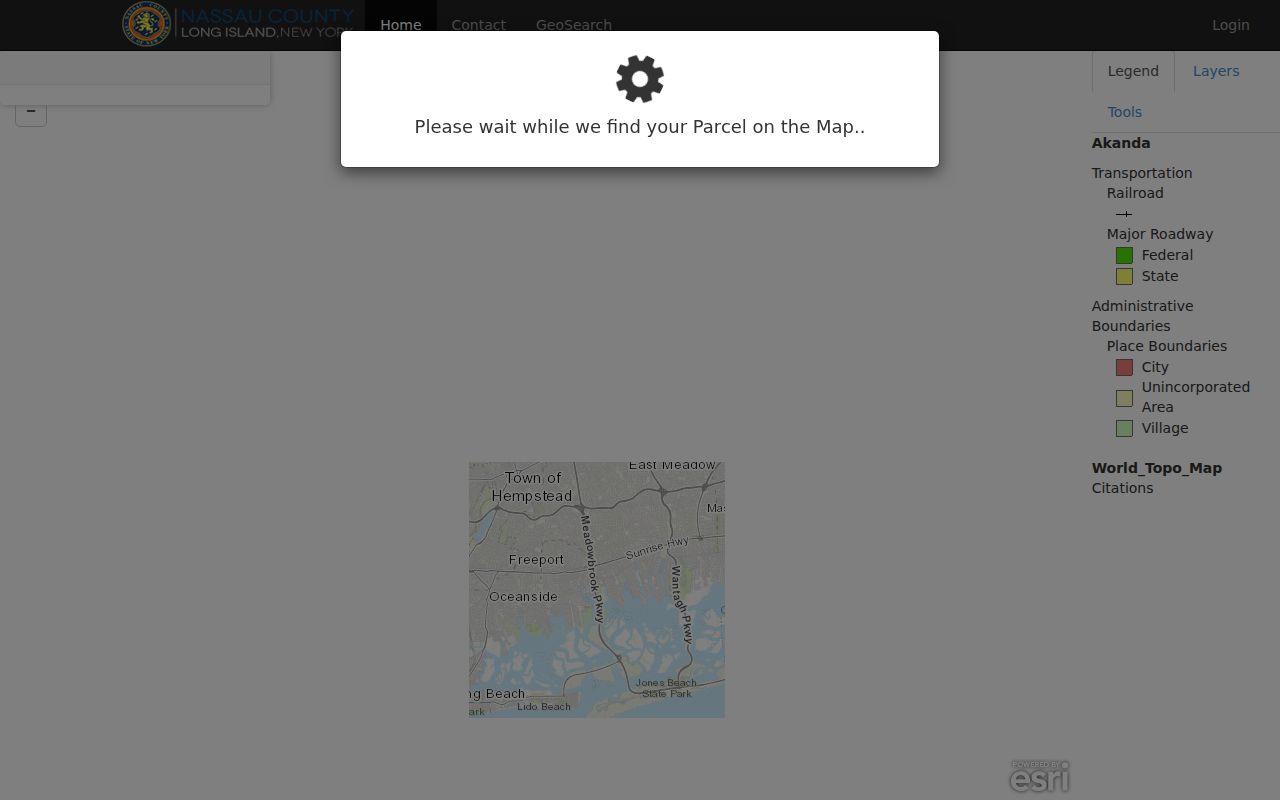
The image shows a parcel-viewer route, not a resident list. A street directory serves the wider chain better. Once the adjacent parcels are clear, use the Valley Stream street records search for homes along a named street.
Valley Stream Parcel Names and Limits
Nassau's public assessment side is built around a parcel. Enter an address or an SBL to begin. The detailed property page can carry assessment data, taxing and district fields, maps, photographs, past taxes and rates, exemption details, comparable-sale leads, and linked GIS. The landing page offers no public owner-name field. An address result is a property lead. It is not a name-browsing tool. An owner on a roll is simply a record owner. A mailing address may just be where notices go. A recorded party might be a trustee, lender, agent, buyer, or seller at a moment in time. Exemption data belongs to the property file too. None of it proves who occupies a home or how many share it. That gap matters most when several adjacent Valley Stream parcels sit in one comparison.
Valley Stream Tax Roll on a Block
The Village Tax and Assessment Department reports roughly 11,000 parcel records. It maintains ownership, exemptions, assessed values, physical-property changes, assessment rolls, tax rolls, bills, and collection information. The 2025 roll is detailed. It lists parcel or grid identifiers, owner and mailing data, deed book and page, property description or class, values, exemptions, and tax. Once the GIS search pins down the exact parcel, the roll becomes a useful time-stamped comparison. A Village roll covers only the incorporated Village. Postal Valley Stream reaches beyond that line. So confirm the LRV Village field first. Where County and Village material disagree on a field, keep both dates and ask the responsible office which system owns it. A shift in value, owner, or mailing data may simply be a tax-record update. It need not mean the neighborhood changed.
Recorded Documents Near Valley Stream
A parcel lead can grow into a full land-records trail. The Nassau County Official Records Search gives the Deeds and Mortgages office several ways in: Name, Document, Book, Section, Reference, and Recorded Date. A name search trims down nicely. Narrow it by party type, name type, document types, and a recorded-date range. Before trusting any index result as a match for a neighboring parcel, line up the party role, document type, date, document number, book or page, legal description, and SBL. One field alone can mislead.
Searching the index is free. Images from February 22, 1994 onward come through an account with pay-per-access. Older material takes a different path. Try the Nassau County Clerk's Map Room in Mineola, a Clerk counter, mail, delivery, or a drop-box request. County records reach back to 1899. So a missing online image does not mean no earlier record was ever filed.
Historic Valley Stream Block Names
Valley Stream Historical Society material is rich with place history. What it does not offer is a current neighborhood membership list. Names like Green Acres/Mill Brook, Gibson, Valley Stream Civic Association, North Central Civic Association, East End Valley Stream Civic Association, and Parkwold Civic Association are best treated as context for a map, newspaper, or directory search. Green Acres/Mill Brook grew up in the late 1930s. Its street names draw on trees, flowers, fields, and plant life, which can help date a source or map layer. Gibson Civic Association was reported dissolved in 2005.
No official current roster of homeowner-association or civic members exists for these names. Use the historic labels to steer you toward local maps, newspapers, oral histories, or directory references. Do not use them to claim that a person belongs to a present group or lives on the block.
The Village Clerk FAQ works the same way. It is a municipal guidance channel, not a community roster, and it routes address-specific questions to the right Village office.
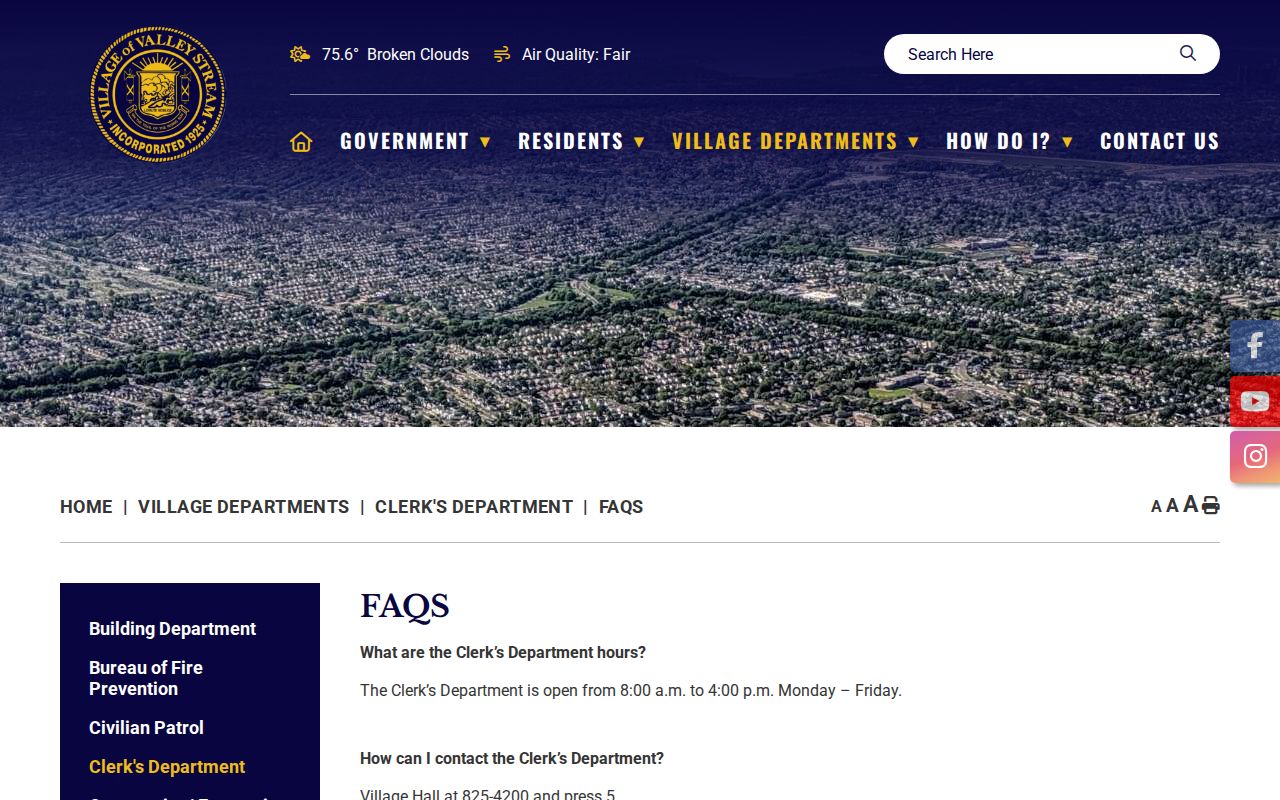
That distinction matters in practice. A narrowly written Village record request can ask for an existing address file. A request for a list of current neighborhood members asks for something that does not exist.
Valley Stream Neighbor Voter Limits
New York's Voter Registration and Poll Site Search is built for self-service. A voter checks their own registration and polling details with identifying fields. It is not a tool for browsing a street. Nor can it build a local roster. A match may show registration status, election district, party enrollment, polling location, and electoral-district information. But it never turns nearby parcel addresses into public voter records.
The Nassau County Board of Elections handles registration, corrections, canvass, and election administration locally. New York Election Law §3-103(5) bars non-election use of voter-registration data. Board guidance on voter-data requests requires an elections-purpose affirmation. That is not a path for finding a nearby person. Remember that a self-service nonmatch can stem from spelling, address, county, or protection issues. It never proves a person did not live at an address.
The Nassau County voting-services page shows the Board's official channel for election-record questions.
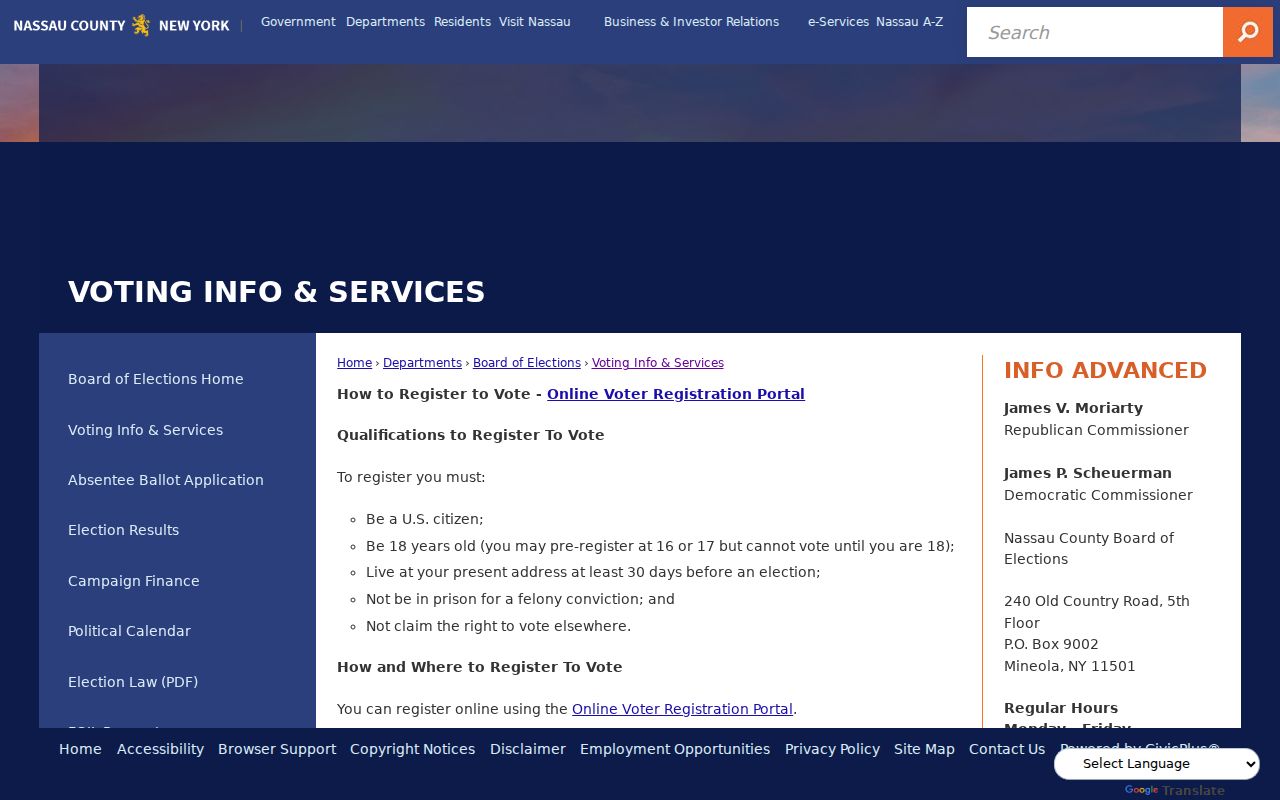
The Board can answer questions about its own records and procedures. It does not turn voter administration into a block-by-block directory.
Valley Stream Confidential Voter Records
Confidential registration adds a separate layer of protection. New York keeps qualifying domestic-violence survivor records apart from public inspection or copying. That protection lasts for four years. Election officials are the only exception. Address Confidentiality Program participants use the Statement of Confidential Voter process with their county board. Individual identifiers and protected-voter details are simply not material for a block search.
Program participants may use a substitute mailing address. State and local entities must safeguard the actual address under program rules. The program does not erase every earlier electronic or paper appearance of an address. That limit is not permission to assemble or expose protected location information. If information is missing, leave it alone rather than testing it through another database.
The New York confidential-registration page documents the State's protected-voter procedure.
These protections are one reason a map or tax record can never serve as a full list of people tied to a Valley Stream block.
Official Records and Neighbor Tools
Official parcel and Clerk records carry a named custodian. They also carry a defined purpose and a checkable date. Commercial neighbor-lookup products are a different animal. They can merge public and commercial data. They may be stale or mismatched, and they are not the official channel for correcting a government record. Verify any property result with the office that holds it. That matters most when the answer hinges on a party role or a jurisdiction field.
| Official parcel or record source | Commercial neighbor-lookup category |
|---|---|
| Shows a defined parcel, recorded transaction, or municipal file with a named custodian and source date. | May combine information from varied sources and can carry an unclear update date or match method. |
| Corrections go to the Assessment Department, County Clerk, Board of Elections, or other record custodian. | Corrections require the company's posted privacy or opt-out process, not a change to the government source. |
| Does not promise a complete household roster. | Does not replace a current, official, and properly matched record. |
Spot an error in a County or Village record? Ask the custodian which office maintains the field, and hand over the SBL or document citation. Never treat a commercial listing as the only proof of identity or location.
Privacy Limits for Valley Stream Neighbors
Valley Stream keeps tight limits around who can be identified through public records. That is by design. No public block tool lists every current resident. Utility accounts, delivery files, and DMV records are not open address-directory sources. FOIL covers records an agency already holds, and privacy exemptions still apply. An agency will not build a custom resident list just because someone asks. A narrow request works best. Name the parcel, the address, the record type, and the period you want.
Treat each property or historical record as an answer to a real question, whether personal, civic, or family-history. Context matters. Respect protected records. Never read an old deed party or an owner mailing address as proof of where someone lives now. Used with care, the local record trail can trace a parcel's past without prying into any household.